
Chairman Kim Jun-sik Delivers Daedong Group’s 2026 New Year Address
Chairman Kim Jun-sik Delivers Daedong Group’s 2026 New Year Address,
“Transforming into an AI and Robotics Company to Accelerate Product and Operational Innovation Through AX”
-. Highlights performance-driven results through AI-powered product innovation aligned with real agricultural needs
-. Company-wide AX enables employees to leverage AI agents, enhancing productivity, problem-solving, and execution
-. Building on simultaneous revenue and operating profit growth in 2025, Daedong positions 2026 as a year of visible profit-led growth
Daedong (Co-CEOs Kim Jun-sik and Won Yu-hyun), a leader in future agriculture, announced on January 7, 2026, that company President Kim Jun-sik used his New Year address to employees to designate 2026 as the starting point of Daedong’s full-scale transformation into an AI and robotics-driven enterprise. He also outlined plans to accelerate company-wide AI Transformation, or AX, while reinforcing a strategy centered on sustainable profit growth.
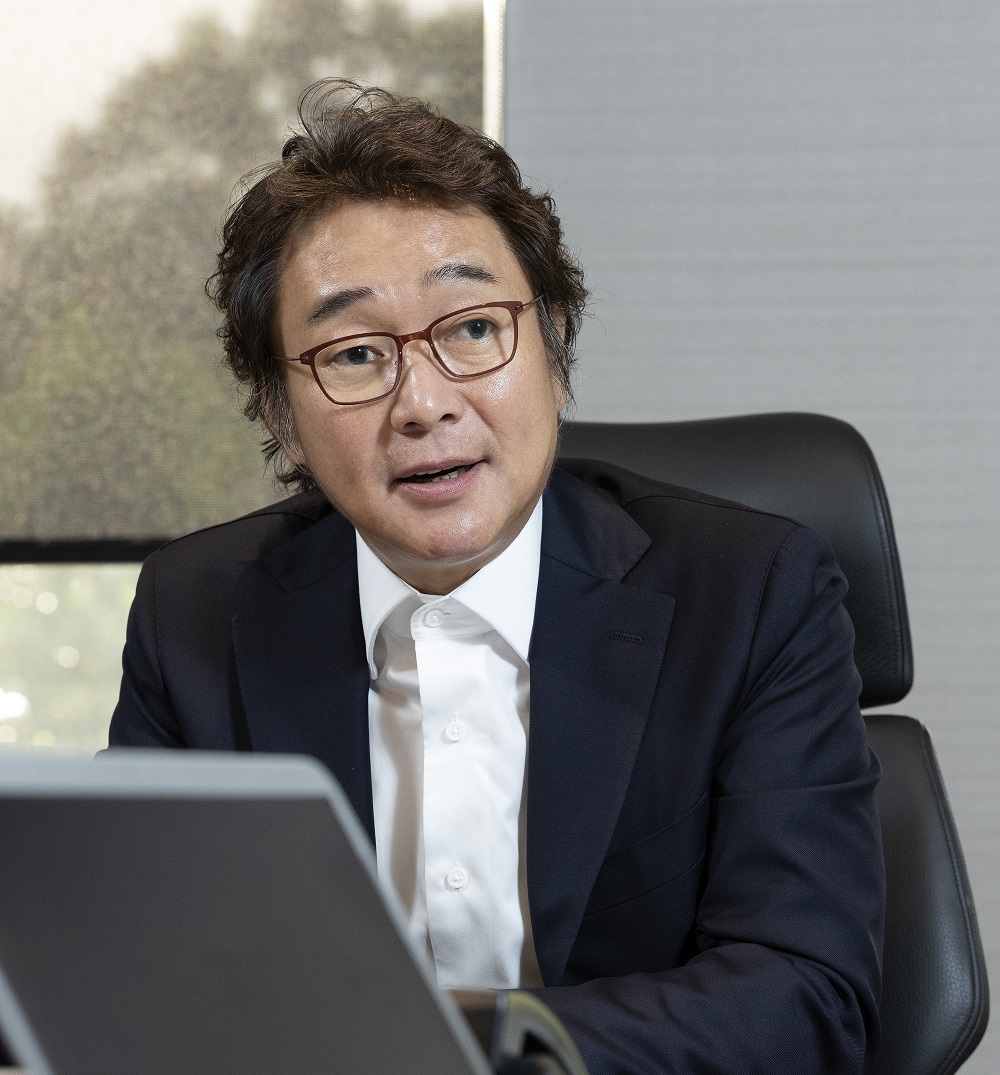
Kim described 2025 as a year that reaffirmed Daedong’s underlying strength, delivering growth in both revenue and operating profit despite a challenging external environment shaped by intensifying US–China technology competition and global tariff pressures. He highlighted major achievements, including the launch of a 1.14 million pyeong precision agriculture demonstration initiative in Korea and expanded market share in North America and Europe, emphasizing that these results were driven by employees’ commitment and strong execution across the organization.
Since announcing its vision as a future agriculture leader in 2020, Daedong has advanced its transformation through phased innovation initiatives structured in three-year cycles. From 2020 to 2022, the company focused on building a foundation for change and advancing digital transformation. Beginning in 2023, Daedong shifted toward future growth areas, prioritizing the development of core capabilities such as AI and robotics. Starting in 2026, which marks the beginning of a new three-year phase, Daedong plans to move forward with a full-scale AI and robotics transformation across its business, building on the capabilities it has developed to date.
Kim stressed that Daedong’s AI and robotics transformation must move beyond declarations and deliver tangible improvements in customer productivity and profitability in real agricultural settings and field operations. This reflects the company’s commitment to proving results through qualitative innovation in products and services rooted in Daedong’s proprietary technologies and long-term philosophy.
Kim outlined three strategic priorities for 2026: AI and robotics-driven product innovation, company-wide execution of AX, and the clear realization of profit growth.
Emphasizing the importance of product innovation and measurable outcomes, Kim called for the consistent integration of AI and robotics value across all products and throughout the entire customer experience. Under this strategy, Daedong will systematically apply future core technologies, including AI-powered precision agriculture, AI, robotics, and smart farming, across its products and services, with a clear focus on translating these capabilities into tangible results such as revenue growth and improved operating profit.
Daedong will also move forward in earnest with company-wide AX. Built around a framework encompassing Business Innovation (BI), Process Innovation (PI), and Work Innovation (WI), the initiative will expand the use of personal AI agents across the organization to enhance overall productivity. At the same time, the company will strengthen the application of AI throughout its operational processes. Through these efforts, Daedong aims to establish work structures centered on problem-solving, data-driven decision-making, and a culture of fast yet accountable execution.
In addressing profit growth, Kim highlighted cash-generation capability and financial resilience as core elements of corporate competitiveness. He noted that the focus must extend beyond short-term cost reductions to structural innovation that fundamentally redesigns cost structures across the entire value chain, including design, procurement, manufacturing, logistics, and service. Kim explained that this structural innovation, working in tandem with the AI and robotics transformation and company-wide AX, will serve as a key driver in shifting the business portfolio toward profitability and establishing a stable foundation for sustainable growth over the mid to long term.